Paper Signature: A Handwritten Font That Sells
As a maker who prints labels, cuts vinyl for boutique tags, designs printable wedding suites, and ships handmade goods weekly—I’ve learned that typography isn’t just decoration. It’s the first whisper of trust, warmth, and intention your customer hears before they even touch your product. That’s why Paper Signature has become my go-to script font in the Script Amp collection: it’s not just pretty handwriting—it’s purpose-built charm with commercial clarity.
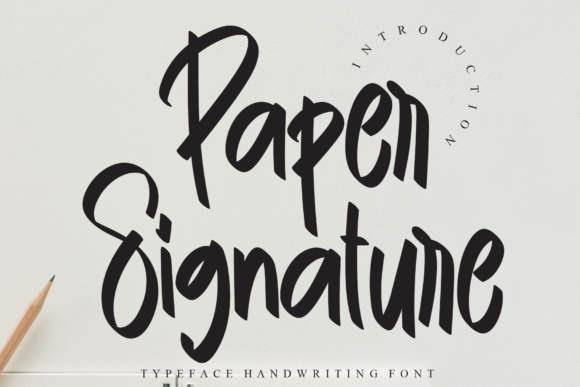
What makes Paper Signature different from other handwritten fonts? It’s in the rhythm. Characters don’t just sit on the baseline—they dance along it, with subtle bounce, gentle slant, and organic spacing that feels alive but never chaotic. There’s no forced flourishes or over-the-top swashes to trip up your Cricut or Silhouette. Instead, you get clean entry and exit strokes, consistent x-heights, and generous counters—details that matter when you’re laser-cutting 2mm sticker text or printing tiny candle jar labels at 8pt.
I use Paper Signature most often for short, high-impact applications: product names on apothecary jars, “Hand-poured” on soy wax candles, “Made with Love” on gift tags, and “Welcome” on farmhouse-style wooden signs. Its friendly quirkiness reads as approachable luxury—not stiff elegance, not childish whimsy, but something warm, intentional, and quietly confident. Customers tell me my packaging “feels like a gift,” and I know part of that is how Paper Signature softens edges without sacrificing legibility.
For printable creators, this font shines in digital downloads where emotional resonance drives sales. Think: wedding welcome boards (paired with a light sans serif for guest names), planner cover pages (“Your Calm Space”), seasonal SVG bundles (think “Cozy November” or “Spring Blooms”), and boutique-style wall art prints (“Good Things Take Time”). Because Paper Signature includes standard ligatures and stylistic alternates, you can easily swap out “&” or “ff” pairs for smoother joins—and tweak character flow without switching fonts mid-design.
Readability matters most where precision counts. On small stickers (under 1 inch wide), I stick to uppercase words or short phrases—“Yes Please,” “Hello Friend,” “Small Batch”—and avoid tight kerning adjustments. For printed cards or invitations, I size it between 16–24pt for body headings and 36–48pt for titles. When used on mugs or tote bags via heat transfer, I always outline the text first and check mockup previews at actual print size—Paper Signature holds up beautifully because its stroke contrast is balanced, not extreme.
Font pairing is where Paper Signature truly earns its keep. As a script font, it needs grounding—and I almost always pair it with a clean, neutral sans serif like Montserrat Light or Inter Regular. For wedding stationery, I’ll layer it over a delicate serif like Cormorant Garamond for ceremony programs. For product packaging, I match it with a sturdy geometric sans (like Poppins SemiBold) for ingredient lists or care instructions. The contrast works: Paper Signature brings voice and personality; the supporting font delivers clarity and structure.
It’s also versatile across formats. Whether I’m exporting SVG files for cutting machines, generating PNG overlays for Canva templates, or building layered PSD mockups for Etsy listings, Paper Signature exports cleanly in OTF and TTF formats. No missing glyphs, no encoding hiccups—even when I drop it into Procreate with font import or use it in Adobe Express for social media banners. And yes, it supports basic Latin multilingual characters (including accented letters used in French, Spanish, and German), which matters if you sell internationally or design bilingual baby shower invites.
Practically speaking, Paper Signature isn’t meant for long paragraphs or body copy—and that’s by design. It’s a display font, built for moments of emphasis, not endurance. Use it for headlines, quotes, monograms, and signature lines. Skip it for ingredient tables or multi-page instruction guides. That limitation isn’t a flaw—it’s focus. When every letter carries expressive weight, less really is more.
Licensing is non-negotiable for sellers. The Paper Signature license included with Script Amp covers commercial use across physical products (stickers, mugs, apparel), digital downloads (PDF printables, Canva templates), SVG designs, client work, and even resale of editable files—as long as you’re not redistributing the font file itself. I keep a copy of the license in my brand assets folder and double-check terms before uploading new listings to Etsy or Creative Market. It’s peace of mind that pays for itself in one avoided takedown notice.
Real-world examples I’ve shipped this month alone: lavender-scented candle labels with “Slow Down & Breathe” in Paper Signature over matte kraft paper; bridal shower invitation suites where the couple’s names float above a minimalist botanical border; printable “Gratitude Jar” cards for teachers; and seasonal farmhouse signs reading “Pumpkin Spice & Everything Nice” in crisp white vinyl on reclaimed wood. In every case, customers commented on the “handmade feel” and “elegant simplicity”—not the font name, but the feeling it delivered.
If you’re choosing fonts based on what looks cute in a preview window, you’ll miss the real value. But if you’re choosing based on how well it cuts, prints, scales, licenses, and connects—with your brand voice and your customer’s heart—then Paper Signature earns its place in your core Fonts toolkit. It doesn’t shout. It smiles, leans in, and makes your handmade work feel like it was made just for them.